|
|
~ When
Simple Designs Shows Aristocratic Class and Elegance ~
GWI 8-A & B THE PLAIN ROMAN "GW"
MONOGRAM CENTER: There are only a few surviving
specimens of this type and all are found in stamped
Brass. Some surviving un-dug specimens indicate that
this was probably a high-end button that was
gold-washed. As with all GW Inaugurals and New Nation
tribute buttons the design was engraved in a round steel
die hub and then stamped on a blank metal planchet. The Size for GWI
8-A & B is 36mm,
and both variations have a R-6 rarity rating. All
specimens are flat one-piece buttons with soldered on
loop shanks.
The button features a
Plain George Washington
"GW" Monogram in the center. The Monogram
depicts
Roman Font Style letters, and there are two known die
variants, which indicates more then one steel die was
fabricated. Type A depicts a
Wide "W"
for it's
font, and Type B variation depicts a
Narrow "W"
font. Circling around the outside edge of the button is
Livingston's ceremonial slogan given after
Washington's oath ,"LONG
LIVE THE PRESIDENT."
The slogan is in all Roman Font capital letters. Lastly,
the button depicts an incuse Arrow
Tip at the six o'clock
position in the bottom legend. This was most likely used as a decorative separator
to indicate
the beginning and ending of the motto.
* GWI A & B is unfortunately characterized by week
strikes for the GW Monogram. Strong-Strike specimens
should be valued at a higher premium regardless of being
dug or not! - Robert J. Silverstein
*There is reported information that two others have been
found. One in a garden and one dug on a Beach.~ |
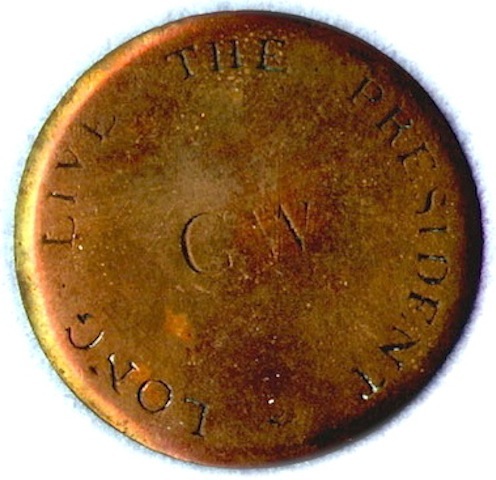
GWI 8-A THE PLAIN ROMAN "GW"
MONOGRAM CENTER
Color: A Mustard Brown.
Metal: Flat, 1-Piece, Stamped Design
Pattern, Gold-Wash Brass.
Size: 36.8mm.
Rarity: R-5.
Variety Type: Wide W.
Present Condition: A Non Excavated
Specimen, Exceptional Planchet Casting, Strong
Impressions.
Obverse Button Analysis: This buttons
still has an attractive surface, and still has
strong impressions. The brass planchet appears
to be smooth
and flat, and shows no waviness to the metal or shallow
depressions in the metal. There appears to be no metal
fatigue or deterioration. The surface has a few
light scratches and scuffs throughout, but time seems to
have blend them in with the buttons color and
surface. The Roman Style
letters for the wide "GW" Monogram only show a light
to moderate
foot print, but all the stamped letters lines
are easy to see. The Roman Font Capital letters
in the Slogan still show a good solid impression, and
the words are easy to read. Just to note for accuracy, all
the stamped "E's" in the Slogan appear to have
weak stamped tops and bottom stems. The incuse
Arrow Tip on the bottom is unfortunately worn smooth into the
surface, and only depict the slightest remnant of
it's former impression. Since this particular
variety is known for weak die strikes, this
seems to be a good solid example for a collector.
Reverse Button Analysis: This is a
One-Piece Casting for the Reverse Shank. The shank is
original, straight and still intact. It was
reported to have very minor abrasions to the
surface.
Library Records Has Limited Information WI
8 A-1:
History: Yes
Recorded
Sales Price: Yes
Current Button Owner and Location: No
Harold Cobb/Descendants
1956 to 2003
Purchased from S. Luscomb in 1955.~
|
GWI 8-A THE PLAIN ROMAN "GW"
MONOGRAM CENTER
Color: An Emerald Green W/ Gold
Highlights.
Metal: Flat, 1-Piece, Stamped Design
Pattern, Gold-Washed Brass.
Size: 36.20mm.
Rarity: R-6.
Variety Type: Wide W.
Present Condition: An Excavated
Specimen, Exceptional Planchet Casting,
Exceptional
Impressions.
Obverse Button Analysis: This button has
an amazing dark Emerald Green Collar that is
uniform across the surface of the obverse and
reverse. The steel die hub strike impressions
appear to be superior for this specimen. The brass planchet is
both smooth
like glass and flat right to the beveled edge.
There are a few minor facial scuffs, along with
some very light thin scratches.The Roman Style
letters for the wide "GW" Monogram shows
one of the strongest
foot prints compared to surviving examples. The Roman Font Capital letters
in the Slogan still show a strong impression, and
the letters are very easy to read. As noted in
other examples, all the stamped "E's" in the Slogan appear to have
weak stamped tops and bottom stems. The incuse
Arrow Tip in the bottom legend is worn on the
left corner, but still is easily identifiable.
Reverse Button Analysis: This is a
One-Piece Casting for the Reverse Shank. The
shank is original, straight and intact.
Library Records Has Limited Information WI
8 A-2:
History: Yes
Recorded
Sales Price: Yes
Current Button Owner and Location:
Yes
The Isabela
Collection.~
Dug in Rockingham North Carolina in 1990
by Mr. Moore.~
|
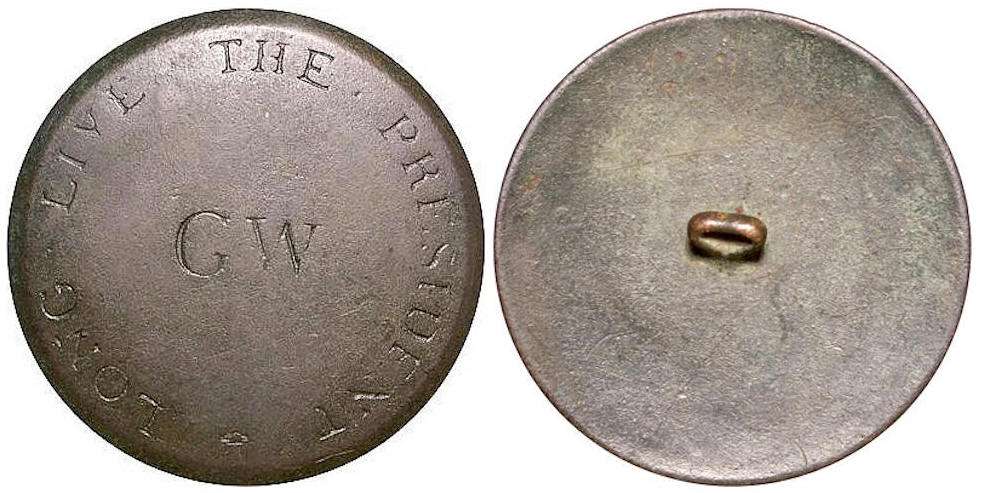
GWI 8-A THE PLAIN ROMAN "GW"
MONOGRAM CENTER
Color: A Natural Olive Chestnut with Some
hints of Light Green in the Patina.
Metal: Flat, 1-Piece, Stamped Design, Brass.
Size: 36.5mm.
Rarity: R-6
Variety Type: Wide W.
Present Condition: A Non Excavated
Specimen, Exceptional Planchet Casting,
Exceptional
Impressions.
Obverse Button Analysis: This button was
fortunate enough to remain in close to Mint Condition.
As far as strike impressions, this most likely
is the finest example known to me at this time.
The brass planchets surface is flat and even, and shows
no sign of metal fatigue or deterioration. The
surface appears smooth, and shows only a few
very light scratches. For the most part, the
natural olive chestnut color is even and
consistent throughout the surface of the obverse
and reverse. Just to note, there is a slight
light green tone Verdigris areas from humidity /
temperature on the outer beveled edge between
LONG and LIVE, and some subtle hints carry onto
the reverse. But overall this does not detract
in anyway from it's pleasing consistent color. The Roman Style letters for the
wide "GW" Monogram are nicely struck, and show
clear letters
lines. The Roman Font Capital letters in
the slogan show a good strong strike with the
Best letter "E" strikes from all the specimens i
studied. The incuse Arrow Tip on the bottom
is razor sharp with a nice strong strike.
Reverse Button Analysis:
Reverse Button Analysis: This is a flat
one-piece button with a soldered on loop shank. The shank is
original, straight and intact. The surface is
mostly smooth, and free of any harsh scratches
or abrasions.
Library Records Has Limited Information WI
8 A-3:
History: Yes
Recorded
Sales Price: Yes
Current Button Owner and Location: No
|
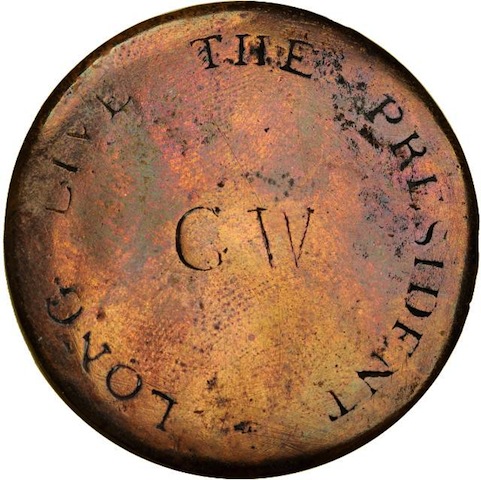 
GWI 8-B? THE PLAIN ROMAN "GW"
MONOGRAM CENTER
Color: An Iridescent Yellow-Chocolate with
An Overwhelming Reddish Orange Mix.
Metal: Flat, 1-Piece, Impressed Design,
Gold-Washed Brass.
Size: 36.8mm. 150.6 grains
Rarity: R-6.
Variety Type: Narrow W.
Present Condition: A Non Excavated
Specimen, Strong Planchet Casting, Strong
Impressions.
Obverse Button Analysis: This button has
been nicely preserved over the years, and shows
some wonderful iridescent colors. The brass
planchet surface is smooth and flat, but shows some
verdigris spots on the metal. The surface has no
scratches or abrasions to speak of, but does have some minor
micro porosity spots on the face along with some around
the edges. The Roman Style letters for the "GW"
Monogram still retains a light foot print impression, but
still gives a semi-good outline of the stamped letter
lines. The letters in the slogan that circles
the outside legend
shows a slightly deeper impression then the
monogram, but some of
the letters in "LIVE" were worn smooth into the
surface. This could be a finger spot since the
other letters appear unworn. Unfortunately, the incuse Arrow Tip on
the bottom only shows a vague partial outline.
The Specimen shows either multiple cleaning or
improperly cleaned
since it's last sale in 2003. I believe a
chemical may have changed
the natural patina of the metal. The results
show more viewable letter impressions since
Sunday & Cobb owned it, but the cleaning
definitely changed it to an almost luminecent- iridescent color.
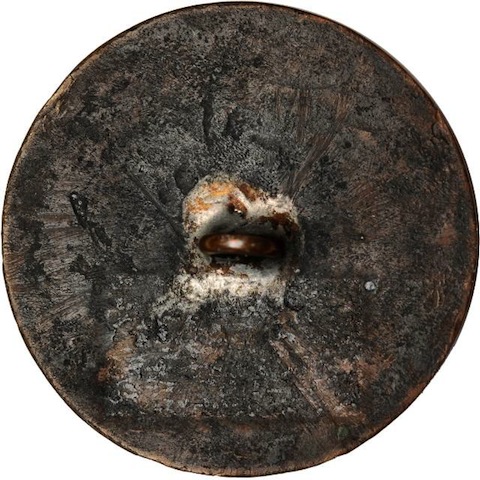
Reverse Button Analysis:
Reverse Button Analysis: This is a flat
one-piece button with a soldered on loop shank. The shank is
re-soldered on, and shows to be straight and still intact. The
surface shows scorch marks, porous areas, and
metal decay unfortunately.
Library Records Has Limited Information WI
8 A-4:
History: Yes
Recorded
Sales Price: Yes
Current Button Owner and Location: No
Harold Cobb/Descendants
1956 to 2003
Purchased from W.F. Sunday in 1956.~
In the early 1940's, during renovation work on
the Southampton, Massachusetts public library,
and old tree was cut down and out of one of its
limbs fell a hand woven linen bag containing
five Cobb 11a's. Three had shanks and two did
not. The group was sold to a local resident, who
sold them to button collectors who heard about
the find. The Cobb piece is from this unusual
find.
|
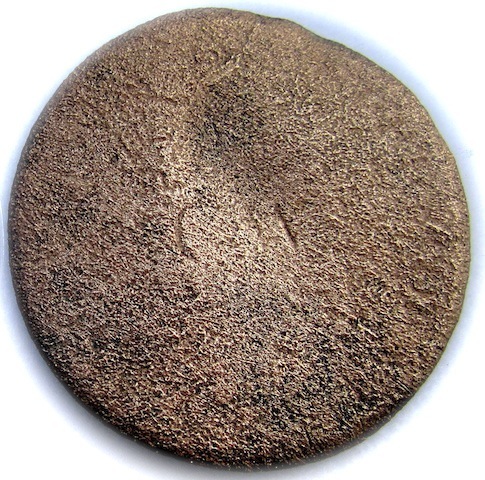 
GWI 8-A THE PLAIN ROMAN "GW"
MONOGRAM CENTER
Color: A Very Light Sandy Brown With
Black Speckles.
Metal: Flat, 1-Piece, Impressed Design, Brass.
Size: 36.4mm.
Rarity: R-6
Variety Type: Narrow W.
Present Condition: An Excavated Example,
Poor Planchet Casting, Poor Impressions.
Obverse Button Analysis: This button was
sand blasted with glass to reach under the
corrosion to get at the design. The brass
planchet is slightly wavy, and has an indent on
the edge at the one o'clock position. The button
exhibits a decayed surface with an extreme
porous nature. The Roman Style letters for the "GW"
Monogram still show a light foot print for the outline, but is
mostly decayed into the surface. Most letter
strength is shown in the back arc of the G, and
there are two visible lines in the W. The Roman
Font Capital letters in the Slogan that circles
around the outside legend is almost completely
absent, except for the faintest remnant outlines
for the word "President". The incuse Arrow Tip is completely
worn away from the six o'clock position. If your a
Serious GW Collector, you would need to
unfortunately consider this button for your
collection because of limited number of
specimens known.
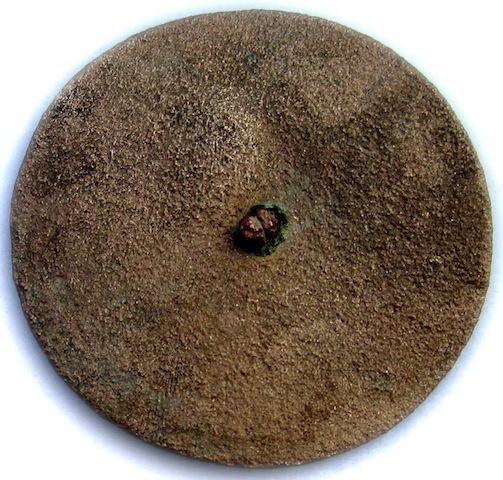
Reverse Button Analysis: Reverse Button Analysis:
This is a flat one-piece button with a soldered
on loop shank. The shank is
harshly broken off. The surface is course with
signs of corrosion, pitting and porosity.
Library Records Has Limited Information WI
8 A-5:
History: Yes
Recorded
Sales Price:
Yes
Current Button Owner and Location:
~ Oklahoma~
The
Charles Gray Collection.
Previously the Isabela Collection.~
*One
of two excavated in Madbury, New Hampshire in March
2011.~
|
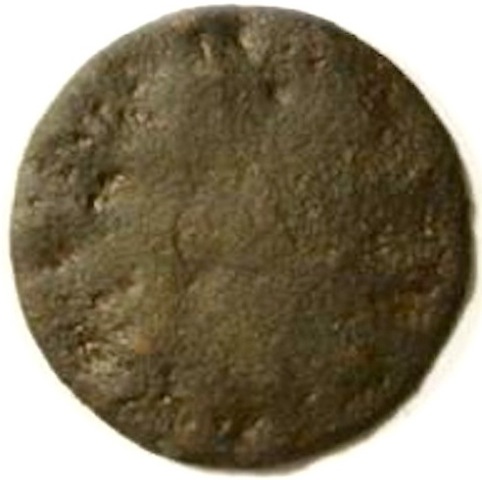 
GWI 8-A THE PLAIN ROMAN "GW"
MONOGRAM CENTER
Color: A Dark Chocolate Brown.
Metal: Flat, 1-Piece, Impressed Design, Brass.
Size: 36.1mm.
Rarity: R-5
Variety Type: Wide W.
Present Condition: An Excavated Example,
Poor Planchet Casting, Poor Impressions.
Obverse Button Analysis: This button has
definitely seen better days. The brass planchet
is extremely pitted and wavy. The surface shows
heavy corrosion, porosity, and shallow
depressions. The outer edge appears to have been
a target for a BB-gun. The Roman Font letters of the "GW"
Monogram are almostly completely worn smooth into the
surface. There are remnants of a slight
outline foot prints for the "GW". Giving it's biggest readable strength
to the back arc of the G, and two of the lines
in the W. The Roman Font Capital letters for the
slogan in the legend is almost completely absent and
unreadable, except for the faintest outlines for
the word President. The incuse Arrow Tip is
completely missing from the six o'clock
position.
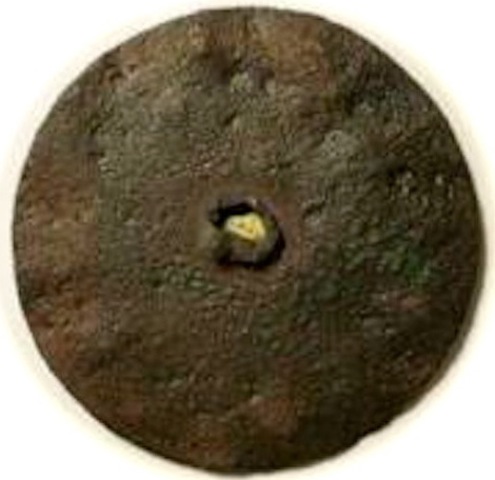
Reverse Button Analysis: This is a flat
one-piece button with a soldered on loop shank. The shank is
present, but bent over. The surface is course
with signs of corrosion, pitting and porosity.
Library Records Has Limited Information WI
8 A-6:
History: Yes
Recorded Sales Price: Yes
Current Button Owner and Location: No
The second one that was excavated in Madbury, New Hampshire in March 2011.~
|
GO BACK -
TOP |